
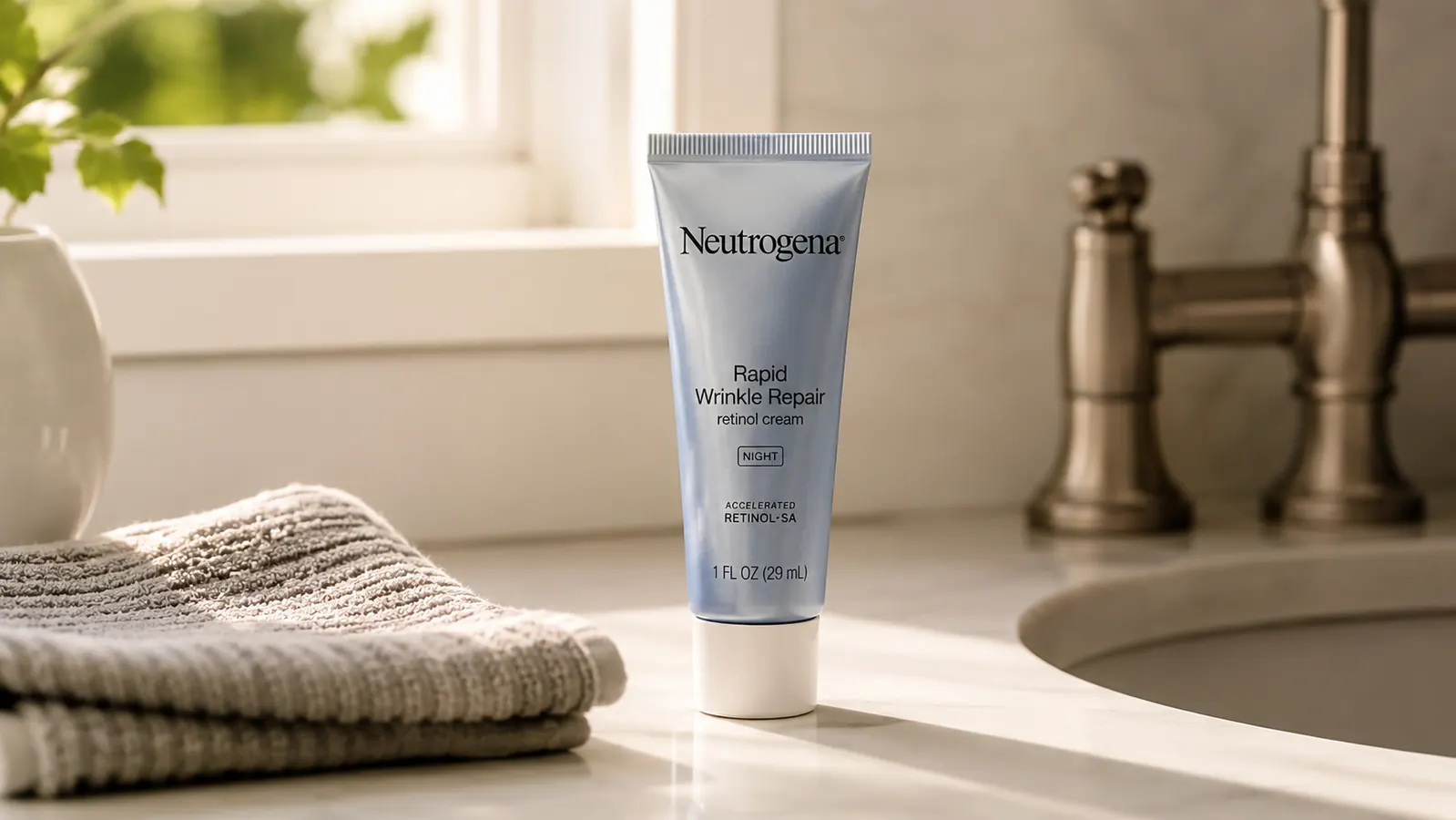
I ran a salon in Marietta, Georgia for twenty-five years, and if there's one product I got asked about more than any other, it's Neutrogena Rapid Wrinkle Repair. Not the fancy department store retinol. Not the eighty dollar serum with the gold dropper. This drugstore tube, sitting on a shelf next to the toothpaste and the cotton balls. Clients would bring it in wrapped in a produce bag like they were embarrassed to admit they used something that cheap, then whisper across the shampoo bowl, 'does this actually do anything?'
I want to tell you what I told them at the chair, the parts that never make it into a five-star Amazon review. Not the marketing copy on the box. The myths that keep people from ever starting a Neutrogena retinol cream in the first place, the application mistakes that make week one miserable, and what actually happens once you get past that and use it the right way for months instead of days.
The Quick Verdict
A genuinely useful drugstore retinol that works well once you stop making the same three mistakes almost everyone makes with it in week one.
Amazon Check Today's Price →Before you buy another jar of hype, check today's price on the one I actually trust.
Neutrogena Rapid Wrinkle Repair uses an encapsulated retinol formula, which is a fancy way of saying it releases slower and irritates less than a lot of the prestige stuff twice its price.
Amazon Check Today's Price on Amazon →How I've Used It on Clients and Myself
I started recommending Neutrogena Rapid Wrinkle Repair to clients back when I still had the salon, mostly to women who wanted a retinol but didn't want to pay for a dermatologist visit just to get a prescription tube of tretinoin. I've now used it myself for close to two years, on and off, with a break during a rosacea flare-up in the middle.
My longtime client Faye Whitcomb, a retired schoolteacher who came in every six weeks for a color touch-up, was one of my first test cases. She was sixty-seven, had never used a retinol in her life, and was terrified of 'that peeling thing my daughter-in-law went through.' I walked her through it slowly, and eighteen months later she still uses the same tube of Neutrogena on rotation with her regular night cream.
My cousin Britt, on the other hand, is thirty-four and rolled her eyes at me the first time I brought it up. She thought retinol was 'a marketing word for expensive moisturizer' until I explained what it actually does to skin cell turnover. She's a believer now, but she also made almost every mistake in this article before she got there, which is exactly why I'm writing it.
My husband Ronnie thinks I'm ridiculous for keeping a running mental file on my own bathroom counter, but that's twenty-five years behind the chair for you. I still text Faye every couple of months just to ask how her tube of Neutrogena is holding up, and she still tells me the same thing, that she wishes someone had explained it to her this plainly the first time around instead of just handing her a box.
The Retinol Myths I Had to Unlearn Behind the Chair
The first myth is that retinol thins your skin over time. It's the opposite. Retinol, including the retinol in Neutrogena Rapid Wrinkle Repair, actually thickens the deeper layer of skin called the dermis by encouraging collagen production. What gets thinner, temporarily, is the very top dead-skin layer, because retinol speeds up how fast old cells shed. That's why skin looks a little pink and feels a little tender at first. It's not damage. It's turnover.
The second myth is that purging and irritation are always a sign it's working. That one's dangerous. Some flaking in the first two to three weeks is normal and expected with any Neutrogena retinol product. Cracking, weeping, or a rash that spreads past where you applied the cream is not purging, it's a reaction, and it means you back off or stop, not push through.
The third myth is that a pricier jar always means a stronger, better result. My former product rep friend Curtis Yoder, who used to run trade show booths for a mid-size skincare brand, told me flat out over dinner one night that a lot of prestige retinol serums use the exact same encapsulation technology as the drugstore versions, just in nicer packaging. The active ingredient percentage matters far more than the price tag.
The fourth myth is that a plant-based alternative like bakuchiol works exactly the same way, just gentler. It's a nice ingredient, and it does have some antioxidant benefit, but the research behind it doesn't come close to matching what's been studied on actual retinol. Curtis called it 'the decaf version,' and after using both, I'd say that's about right. If your skin can tolerate a real retinol like the one in Neutrogena Rapid Wrinkle Repair, you'll see more from it.
The Application Mistakes That Wreck Week One
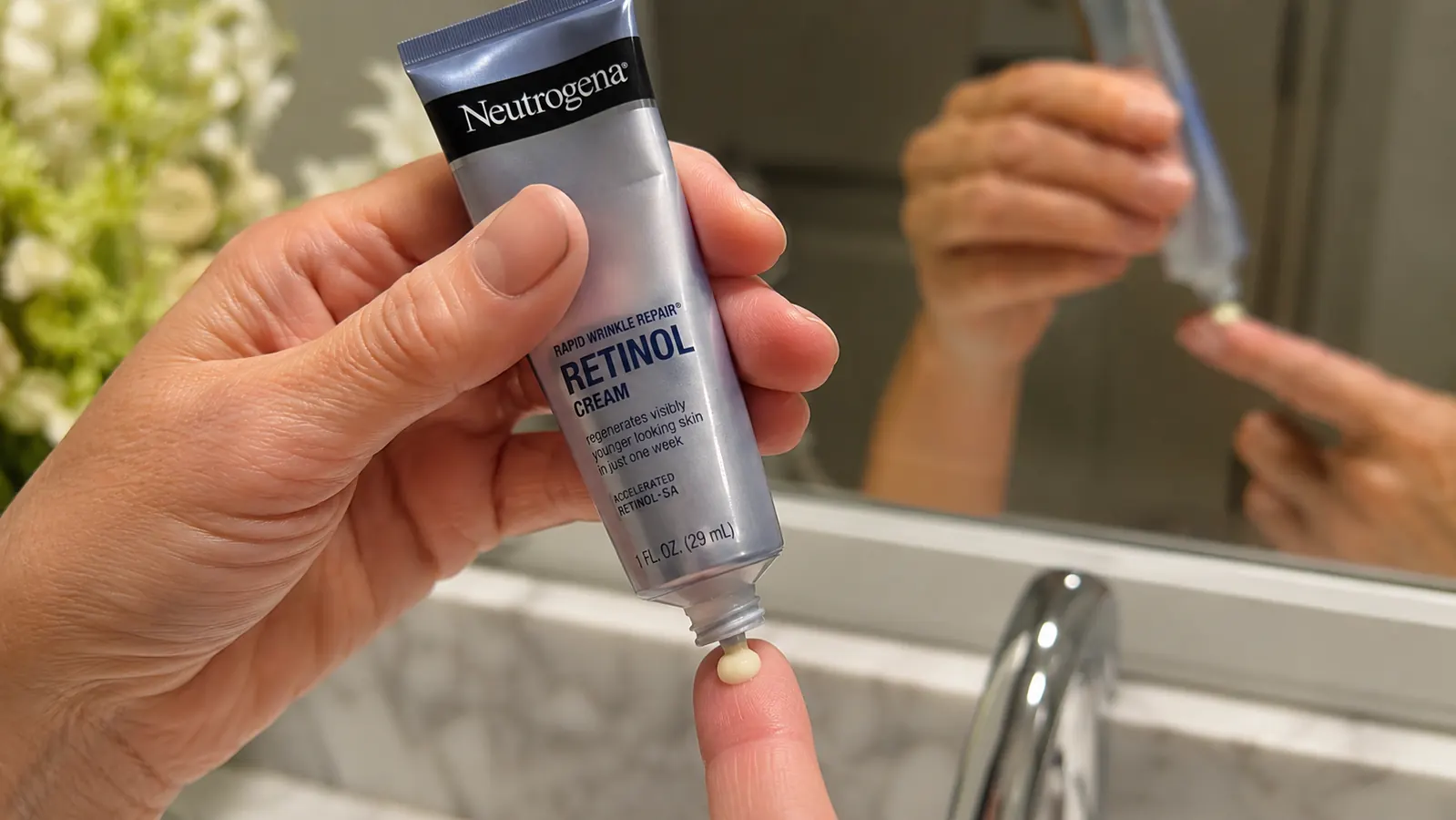
The single biggest mistake I see, and Britt is guilty of this one, is using too much product. A pea-sized amount of Neutrogena Rapid Wrinkle Repair covers your entire face. People slather it on like body lotion, thinking more product means faster results, and instead they end up with the exact redness and flaking that made them scared of retinol to begin with.
The second mistake is applying it to damp skin straight out of the shower. Retinol penetrates faster and deeper into wet skin, which sounds good until you realize that also means it irritates faster and deeper. Pat your face fully dry, wait a few minutes, then apply. It's a small habit change that made a real difference for Faye when she was starting out.
The third mistake is skipping what I call the buffer moisturizer, especially for anyone over forty-five with drier skin to begin with. My neighbor Sandra Voss went straight retinol onto bare skin her first week and ended up with a flaky patch along her jaw for nearly ten days. Applying a plain, fragrance-free moisturizer first, then the Neutrogena cream on top, slows the absorption just enough to keep irritation manageable while you build tolerance.
The fourth mistake is going in too close to the eyes and the corners of the mouth, where skin is thinnest and most reactive. Keep Neutrogena Rapid Wrinkle Repair about a finger-width away from the lower lash line and the lip line, and let it migrate naturally as you smooth it in rather than dotting product directly on delicate tissue. That one change alone stopped Britt's under-eye stinging within a week.
How to Layer It So It Actually Works
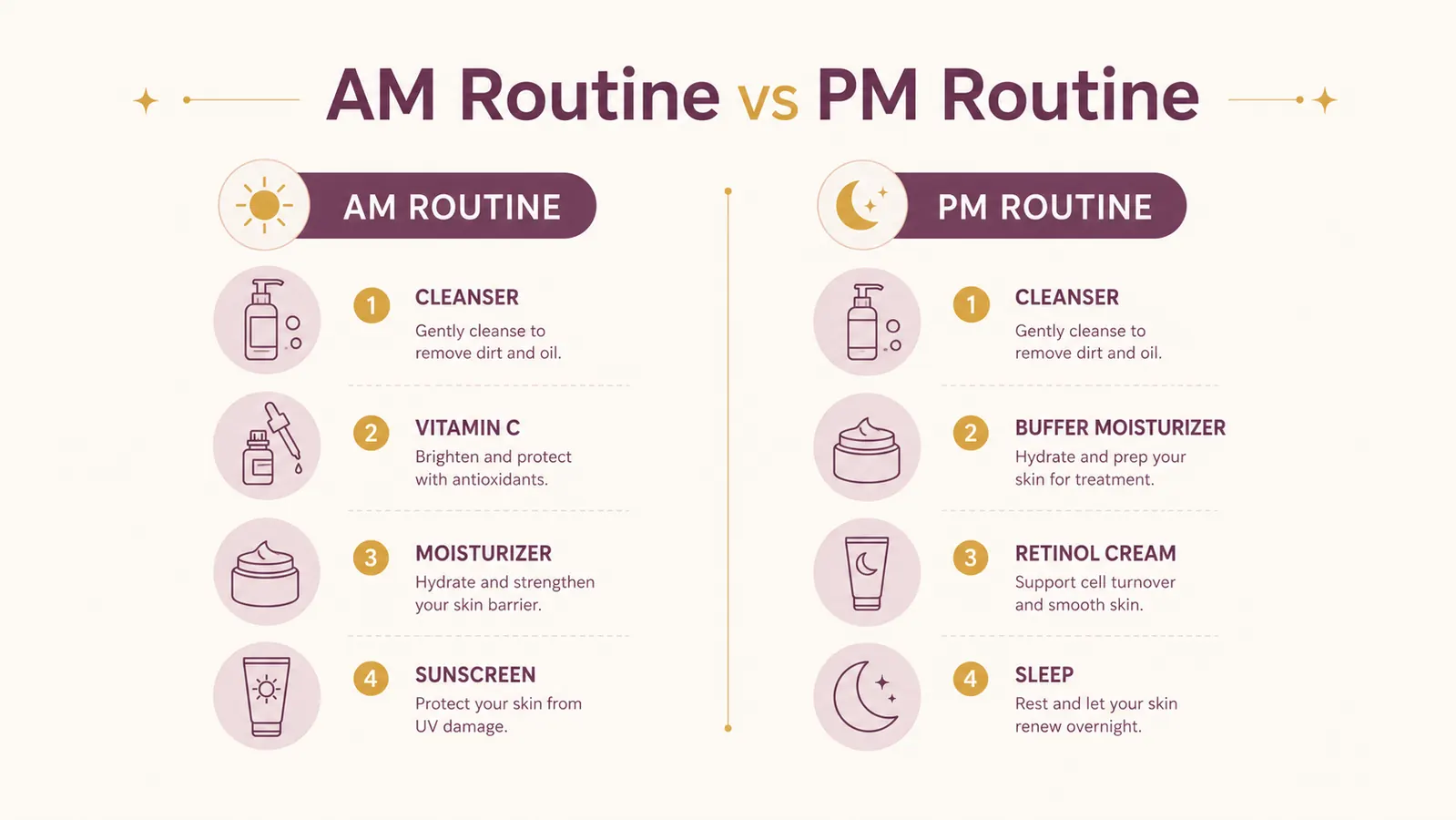
Retinol is a nighttime ingredient, full stop. Neutrogena Rapid Wrinkle Repair breaks down in sunlight and can make skin more sun sensitive, so it belongs in your evening routine only, never your morning one. Save the mornings for a vitamin C serum if you use one, followed by moisturizer and sunscreen.
At night, the order matters more than people think. Cleanse, let your skin dry fully, apply your buffer moisturizer if you're still building tolerance, then the retinol cream, then nothing heavy on top of that. Layering a thick night cream over the retinol dilutes it and defeats the point of applying it in the first place.
Do not mix Neutrogena Rapid Wrinkle Repair with a glycolic or salicylic acid exfoliant on the same night, and don't combine it with benzoyl peroxide either, since that combination can cancel out the retinol and irritate skin at the same time. Alternate nights instead, retinol on some, your acid exfoliant on others, and give your skin a full rest night every few days if you're new to it.
And the layering rule people forget most often is the one for the next morning. Any night you use Neutrogena Rapid Wrinkle Repair, your skin needs real sun protection the following day, not a moisturizer with a token SPF number buried in the fine print. Sandra skipped this for weeks and blamed the retinol for new spots on her cheek that were really just unprotected sun exposure catching up with her.
Buying and Storing It So You Don't Waste the Jar
Retinol degrades with exposure to air, light, and heat, which matters more than most shoppers realize when they're comparing a tube against a jar. Neutrogena Rapid Wrinkle Repair comes in a tube, which protects the formula better than a wide-mouth jar you dip your fingers into every night, but it still isn't a fully airless pump. Keep the cap tightly closed and don't leave it open on the counter while you finish your routine.
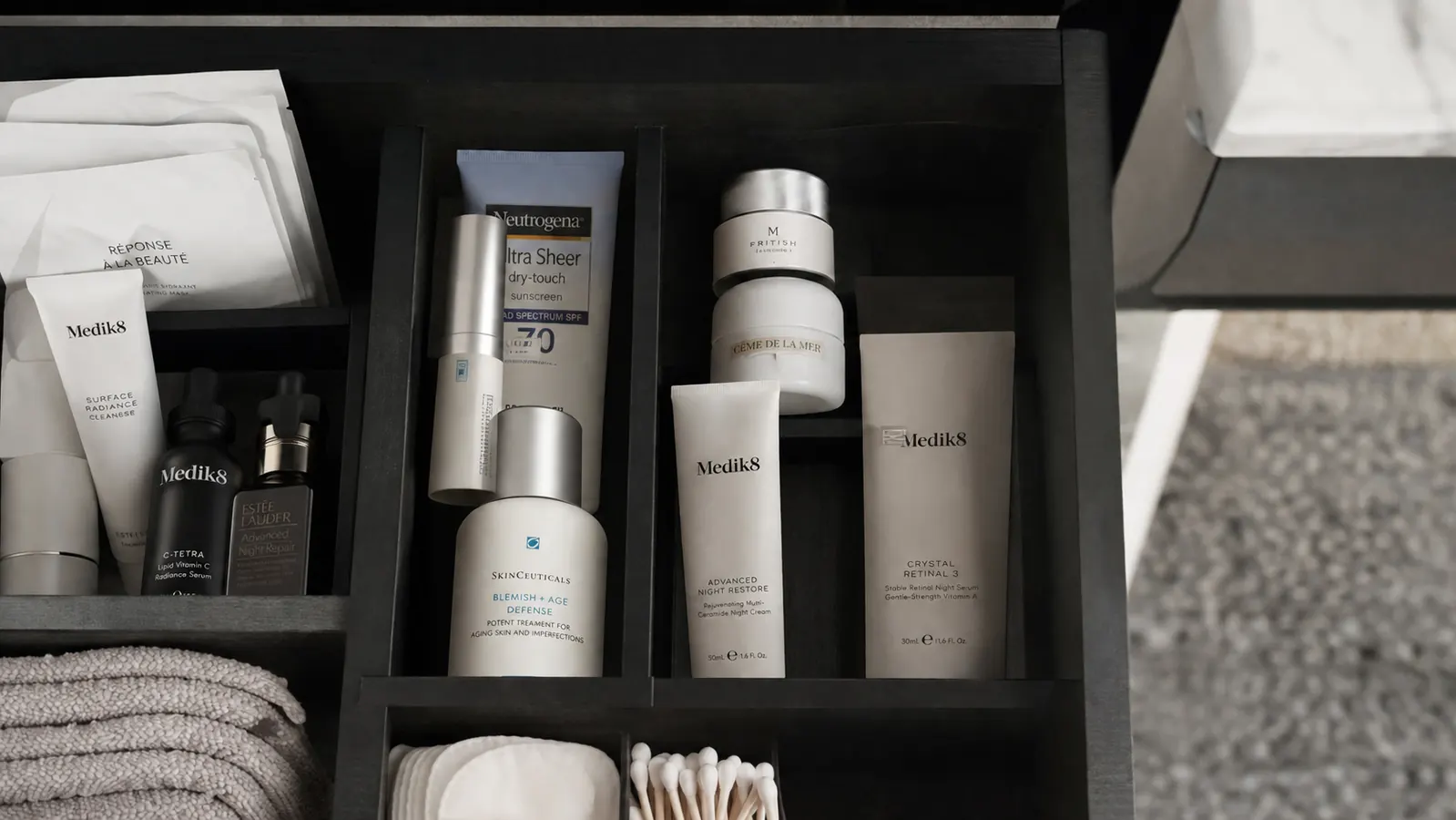
Sandra Voss learned this one the expensive way. She left her tube uncapped on a sunny windowsill for most of a summer, and by August the cream had gone yellowish and barely did anything anymore. Store your Neutrogena retinol in a cool, dark drawer, not a steamy shower caddy, and definitely not anywhere near direct sun.
Check the batch code on the bottom of the box before you buy, especially if you're shopping somewhere other than Amazon or a major retailer, since retinol that's already sat on a shelf for a year or more loses potency before you even open it. And don't assume the drugstore version is somehow inferior. Curtis was right, the active ingredient and the encapsulation technology are what matter, not the shelf it's sitting on.
One more habit worth building, if you travel, is packing the Neutrogena tube in a toiletry bag away from a hot car trunk or a sunny window ledge in a hotel room. Heat is the enemy here just as much as light. I keep a small spare tube in my gym bag year round, and it still performs the same as the one that lives in my bathroom drawer, because it never sits somewhere hot for long.
What Nobody Tells You About the Timeline
Here's the part that gets glossed over in a lot of glowing reviews. You will not wake up on day ten with smooth, line-free skin. The visible changes with Neutrogena Rapid Wrinkle Repair build slowly, over months, and the first few weeks can genuinely feel like a step backward before they feel like progress. Anyone promising overnight results with any retinol, drugstore or prescription, is not telling you the truth.
Most people I've talked through this, Faye and Britt included, started noticing real texture changes somewhere around the two to three month mark, not before. Fine lines around the eyes and mouth were the last thing to soften, not the first, which caught both of them off guard since that's usually the reason people pick up the tube to begin with.
What I can tell you, from watching Faye, Britt, and a whole chair full of clients over the years, is that the ones who stuck with it past that rough first stretch, applying correctly, layering correctly, and storing it correctly, are the ones who came back months later and said their fine lines around the eyes and mouth looked genuinely softer. The ones who quit in week two never found out.
What I Liked
- Encapsulated retinol formula causes less irritation than many raw retinol products
- Hyaluronic acid in the formula helps offset the initial dryness
- Widely available and easy to replace at any drugstore
- Backed by decades of Neutrogena's dermatological research
- Fraction of the cost of prescription or prestige retinol treatments
Where It Falls Short
- Tube isn't a fully airless pump, so potency can fade if you leave it open or expose it to heat
- Has a mild fragrance that can bother very sensitive noses
- First two to three weeks can bring real dryness and flaking, not just gentle purging
- Noticeably milder than a prescription tretinoin, so results take longer to show
- Cap design can trap a little product at the neck of the tube toward the end
The women who quit on Neutrogena in week two never found out what week ten looked like.
Who This Is For
This is for anyone in their late thirties through sixties who wants to try a real retinol without a dermatologist appointment or a splurge-priced serum, and who's willing to go slowly for the first month. It's a good fit if you have normal to slightly dry skin, want smoother texture and softer fine lines over time, and you're okay with results measured in months, not days. It's also a smart pick if you've been burned before by a harsher retinol and want to try again with something gentler.
Who Should Skip It
If you have active rosacea, diagnosed eczema, or skin that reacts badly to almost every new product you try, talk to a dermatologist before starting any retinol, including this one. It's also not the right fit for anyone who wants dramatic, fast results, since a prescription-strength tretinoin will always outpace a drugstore retinol on speed, even if this one wins on gentleness and price. And if you're not willing to add sunscreen into your morning routine, hold off until you are.
If you're ready to stop starting over every few months, start here instead.
Neutrogena Rapid Wrinkle Repair earned its spot in my own nightstand drawer, and it's the one I keep recommending to friends who ask me what actually works.
Amazon Check Today's Price on Amazon →