
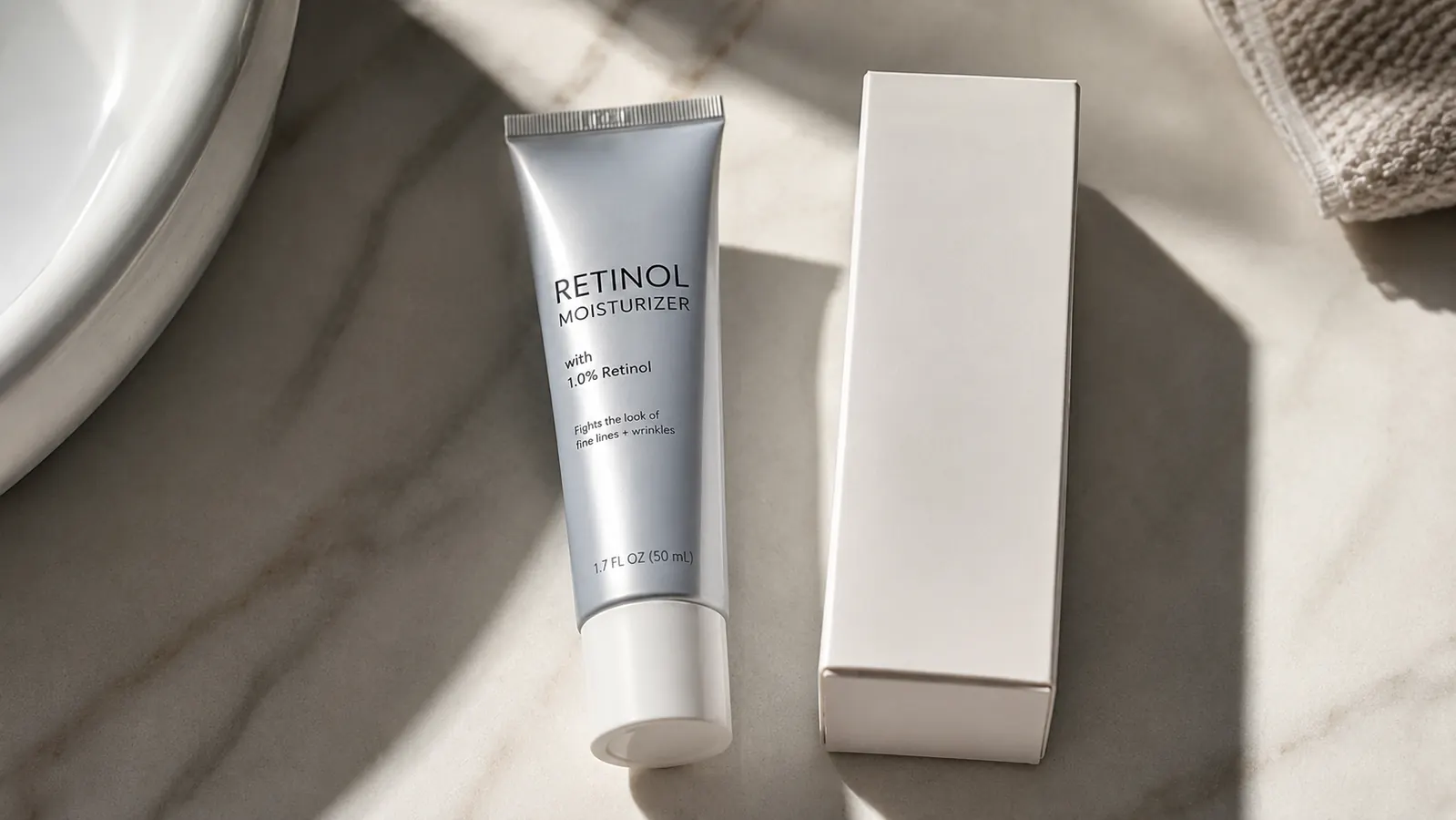
I get this question in the comments more than almost any other one I get: is Neutrogena's Rapid Wrinkle Repair Retinol Face Moisturizer basically the same thing my dermatologist prescribes, just watered down? I ran my own comparison over about four months, wearing Neutrogena Rapid Wrinkle Repair as my nightly routine while tracking notes from a longtime client of mine, Linda, who was three months into a prescription tretinoin cream her dermatologist had put her on for the same reason, stubborn fine lines around the mouth and eyes that showed up hard after fifty. I did not run the two on the same face at the same time, because that is not a fair or safe way to test retinoids, but I compared results, side effects, and real cost close enough over those months to give you an honest answer instead of a marketing one.
Here is the short version if you are short on time. For most women over 40 who want smoother texture and softer lines without a doctor's visit, Neutrogena's cream is enough, and it might genuinely be the smarter first move even if a prescription is available to you. Prescription tretinoin works faster and reaches deeper into stubborn wrinkles, but it comes with a rougher adjustment period, a bigger ongoing bill, and strict sun rules you actually have to follow or you will regret it. Let's get into where each one earns its keep, and where the other one still has the edge.
| Feature | Neutrogena Rapid Wrinkle Repair | Prescription Tretinoin |
|---|---|---|
| Active Ingredient | Retinol, which converts to retinoic acid inside the skin over time | Tretinoin, already the active acid form, no conversion needed |
| How You Get It | Available on the shelf at any drugstore, no appointment needed | Requires a dermatologist visit and a written prescription |
| Current Price | Mid-range for a 1.7 oz tube | Often moderate to high cost per tube depending on insurance and pharmacy |
| Time to See Results | Usually 8 to 12 weeks of steady nightly use | Often 4 to 8 weeks, but with a harsher adjustment phase first |
| Irritation Level | Mild to moderate, buffered by added hyaluronic acid | Moderate to significant peeling, redness and flaking are common at first |
| Built In Hydration | Yes, formulated with hyaluronic acid to offset dryness | No, typically just the active ingredient with no added moisturizers |
| Sun Sensitivity | Present, daily SPF still required | Significant, skin becomes noticeably more photosensitive |
| Ongoing Cost Over a Year | Mid-range for a full year with normal use | Can run several hundred dollars with refills and follow up visits |
| Best Suited For | Fine lines, early texture changes, first time retinoid users | Deeper set wrinkles or stubborn texture under a dermatologist's supervision |
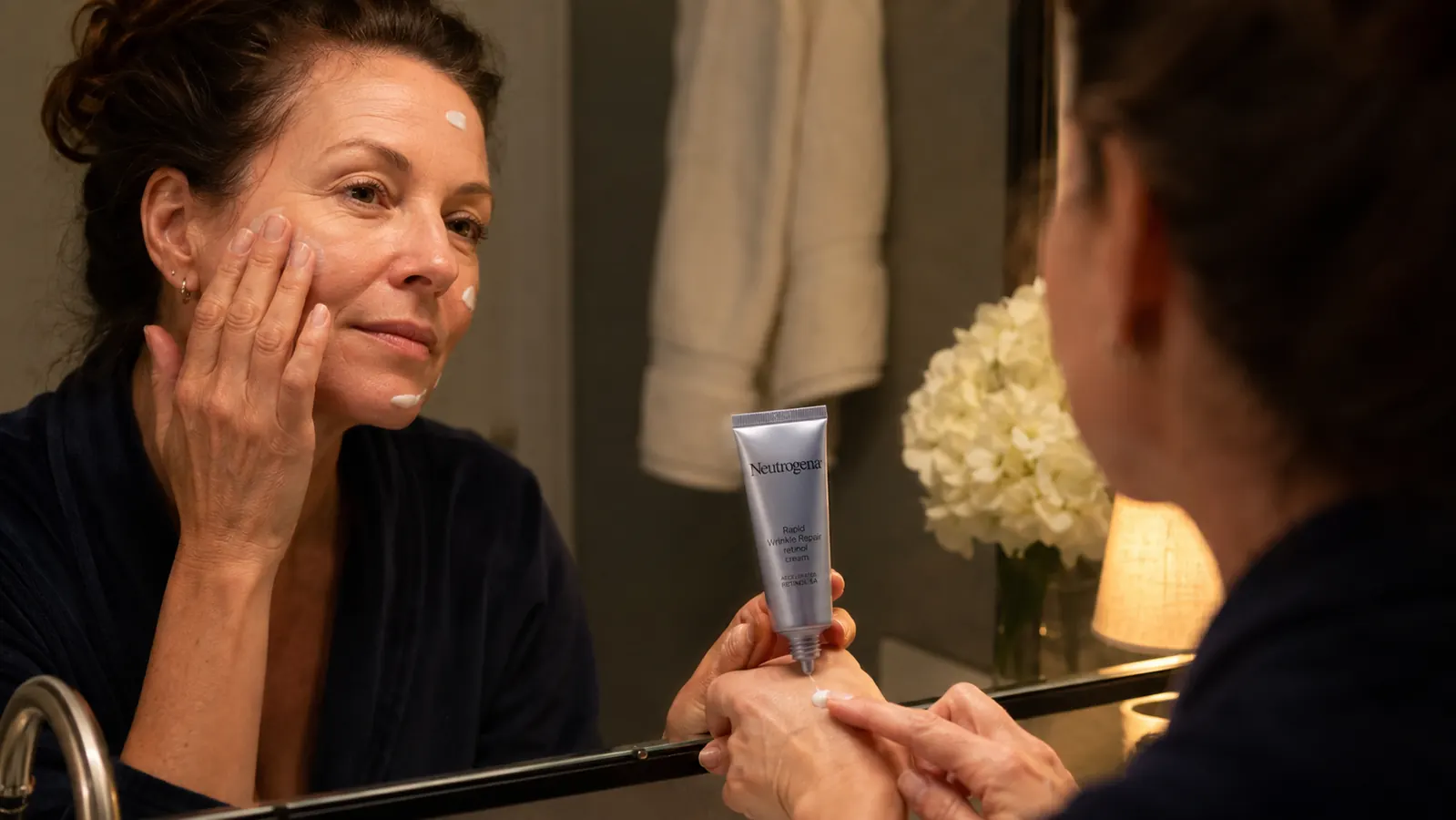
Where Neutrogena Wins
The biggest thing Neutrogena has going for it is that you can start tonight. No appointment, no waiting three weeks for an opening with a dermatologist, no copay. You walk into any drugstore, pick up the Rapid Wrinkle Repair moisturizer, and you are already ahead of where most people are, which is stuck on a waiting list thinking about their skin instead of actually doing something about it. Over 34,000 people have left a review on this exact product, with an average rating of 4.4 stars, and in thirty years of doing skin in a salon chair I can tell you that kind of consistency at that price point does not happen by accident.
The formula also does something a lot of prescription tubes do not bother with. It pairs the retinol with hyaluronic acid, so while the retinol is working to smooth texture over time, the hyaluronic acid is pulling moisture back into skin that retinoids tend to dry out. Linda had to layer a separate moisturizer on top every single night just to keep her face from flaking, which is an extra step and an extra cost that a lot of women do not budget for when they hear how cheap a generic tretinoin tube can be. With Neutrogena, that buffering is already built into the jar, which is a big part of why I could use it nightly from week one without easing in slowly the way you have to with the prescription strength.
There is also a consistency factor that matters more than people give it credit for. Neutrogena formulates this at a strength gentle enough to use every single night without built in off days, and that steady, almost boring repetition is exactly what makes retinol work over months instead of weeks. The clients from my old salon days who saw the best results were never the ones chasing something stronger. They were the ones who used the same jar for twelve straight weeks without skipping nights because their skin got annoyed, and Neutrogena's gentler formula makes that kind of habit a lot easier to build and keep.
Neutrogena also backs this specific formula with its own clinical testing, reporting visible improvement in skin texture in as little as one week and smoother fine lines by four weeks in its internal trials. I did not see quite that fast of a change on my own face, closer to six weeks before my forehead lines started looking different in the mirror, but even a modest early improvement kept me motivated to stick with it instead of giving up the way a lot of first time retinol users do.
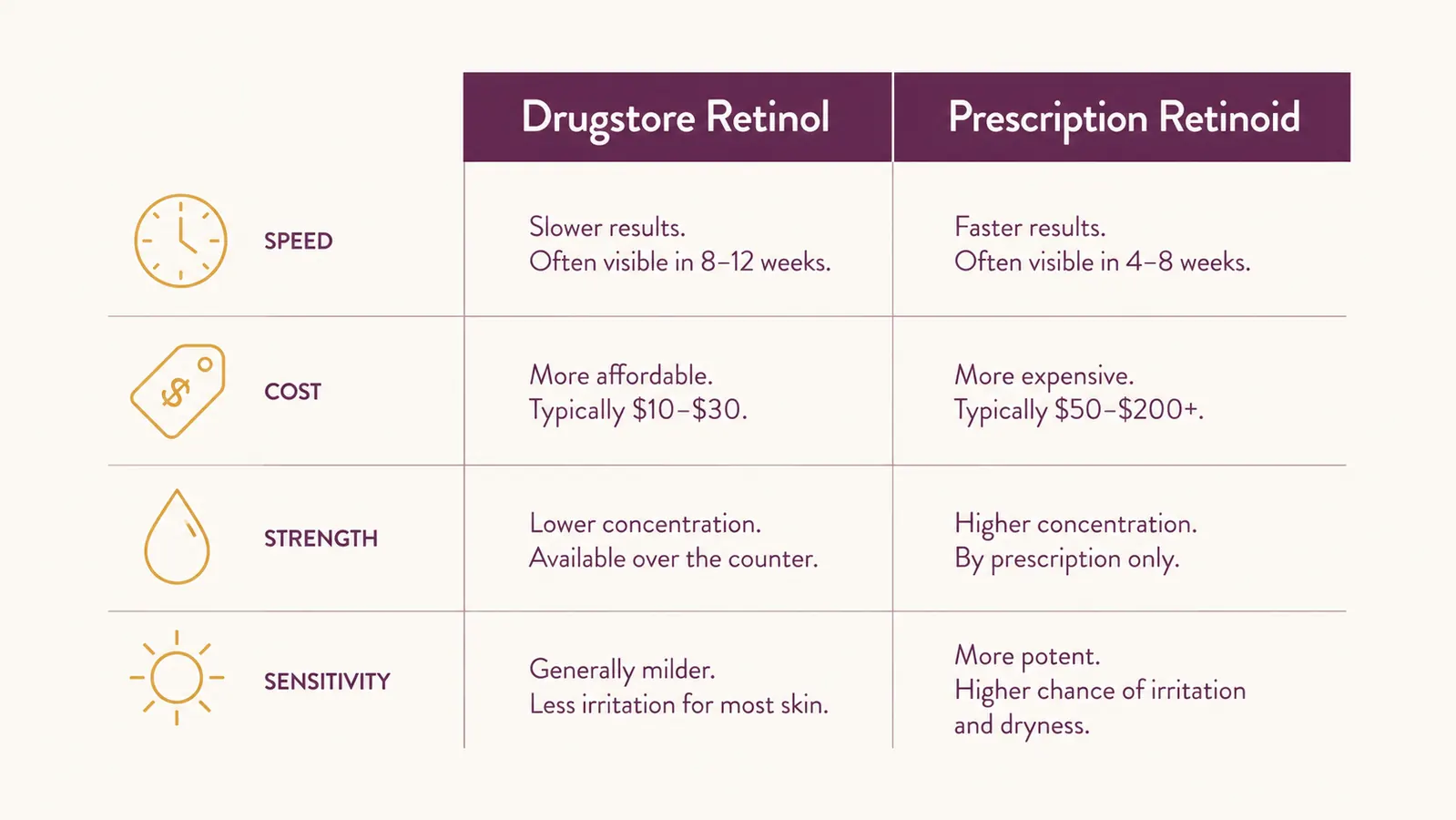
Where Prescription Tretinoin Wins
I have to give credit where it is due, and tretinoin earns it. Retinol has to convert inside your skin into retinoic acid before it does anything, which takes time and means some of its strength gets lost along the way. Tretinoin is already in that active form the moment it touches your skin, so it goes to work immediately and tends to produce more dramatic changes to deeper lines and rougher texture, especially for women dealing with sun damage that goes back decades. Linda's dermatologist had her on a 0.025 percent tretinoin cream, and by week six she was already seeing changes around her mouth that took me closer to ten weeks to see with the Neutrogena formula on my own skin.
The other real advantage is supervision. A dermatologist can adjust her strength, tell her exactly how to introduce it slowly, and catch a reaction early if her skin does not tolerate it well. That matters because tretinoin's adjustment period is genuinely rough for a lot of people, with peeling, redness and flaking in the first few weeks that can look and feel worse before it gets better. Having a professional checking in on that process is worth something, especially if you have rosacea, eczema, or skin that has reacted badly to actives in the past. That kind of guidance is not something a drugstore tube can offer you, no matter how good the formula is.
Tretinoin also comes in a range of strengths, typically from 0.025 percent up through 0.1 percent, so a dermatologist can step a patient up over time as their skin builds tolerance. That kind of dosing flexibility just does not exist on a drugstore shelf, where you get one formulation and that is what you work with. If your insurance covers the dermatology visit and the generic tretinoin itself, the actual out of pocket cost can occasionally land lower than the sticker price on a name brand prescription pad, which is worth asking your provider about directly before you assume prescription strength is always the pricier road.
Tretinoin has also been FDA approved and studied for decades, originally as an acne treatment before dermatologists noticed its effect on fine lines and texture along the way. That long track record means there is a deep body of clinical research behind it, more than almost any other topical anti-aging ingredient on the market, which is part of why dermatologists reach for it first when a patient wants documented, measurable change and is willing to sit through the rougher weeks it takes to get there.
Start tonight instead of waiting three weeks for a dermatologist appointment.
Neutrogena Rapid Wrinkle Repair pairs retinol with hyaluronic acid so you get smoother texture without the harsh peeling phase, and it costs a fraction of an ongoing prescription.
Amazon Check Today's Price on Amazon →The best retinoid is the one you will actually use consistently for the next three months, not the one sitting half used in your medicine cabinet because it burned your face in week two.

Who Should Buy Which
If this is your first time trying a retinoid, if you have sensitive or reactive skin that flares easily, or if you simply want to see whether a retinoid routine even fits your life before you invest more time and money into it, start with Neutrogena's Rapid Wrinkle Repair. It gives your skin the buffer of hyaluronic acid while it adjusts, it costs about $23.19 instead of a recurring pharmacy bill, and you can pick it up today without waiting on anyone's schedule but your own. Most of the women who sit down and tell me they "tried retinol and it did nothing" were using it for two weeks and quitting, not giving it the eight to twelve weeks it actually needs, and starting with a gentler formula makes that patience a lot easier to stick with.
If you already have deep set wrinkles, stubborn sun damage, or you have used over the counter retinol faithfully for six months and plateaued, that is when a conversation with a dermatologist about prescription tretinoin makes sense. Go in informed, ask about starting at the lowest percentage available, and expect an adjustment period that might look worse before it looks better. Keep a heavy moisturizer on hand, because unlike Neutrogena's formula, most prescription tubes will not bring one along for the ride. Some of my clients actually run both at different points in the year, Neutrogena through the warmer months when their skin is already dealing with more sun exposure, and a prescription in the colder months when their skin can tolerate a stronger routine.
One more thing I tell every client before they decide either way: patch test on your inner arm or along your jawline for a few nights before you commit to your whole face, no matter which route you pick. It takes an extra week and saves you from a red, flaking forehead the week of a family event. Linda skipped that step with her tretinoin and paid for it with two rough weeks right before her daughter's wedding, and it is the one piece of advice I repeat more than any other from behind the salon chair.
For most women asking me this exact question on a random Tuesday afternoon, I keep landing in the same place. Start with Neutrogena Rapid Wrinkle Repair, give it the full three months, and see where your skin actually lands before you go sit in a dermatologist's waiting room. You can always step up later. It is a lot harder to step back down once your skin has been through a rough prescription adjustment for results a gentler formula might have gotten you anyway.
Smoother lines without the appointment, the copay or the peeling phase.
Neutrogena Rapid Wrinkle Repair Retinol Face Moisturizer is the one I hand my clients first, and at a reasonable price point it is an easy place to actually start.
Amazon See Current Price on Amazon →