
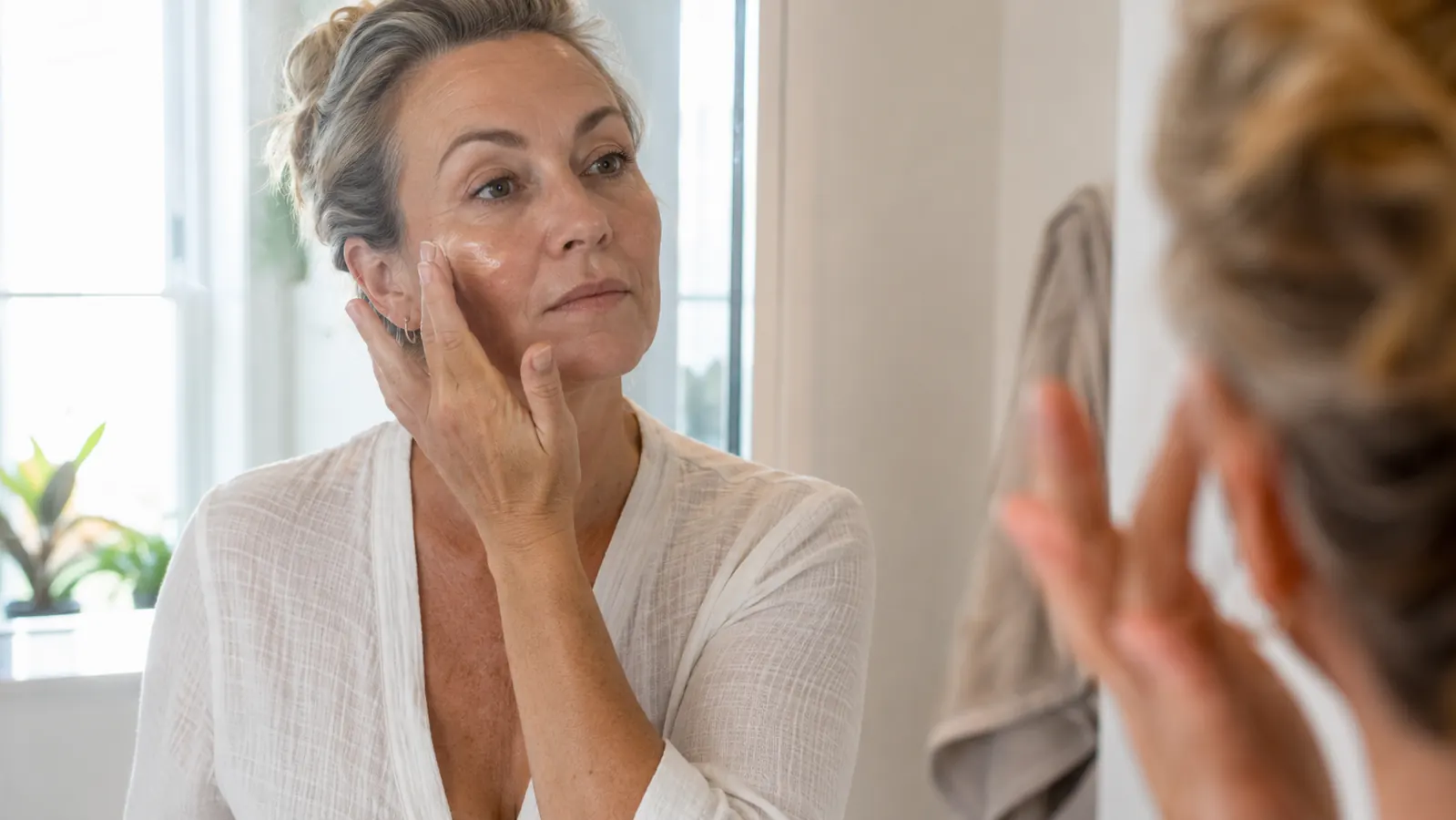
I ran a salon in Georgia for 25 years, and if there is one thing I watched happen over and over, it is a client coming in at 45 or 50 pointing at a new brown patch near her cheekbone or along her part line asking, "where did that come from?" It did not come from nowhere. It came from decades of sun exposure finally catching up, plus the hormone shifts around perimenopause and menopause that make skin more reactive to UV than it used to be. New sun spots are not really new. They are old damage finally surfacing, and the good news is you can slow down the next round starting today.
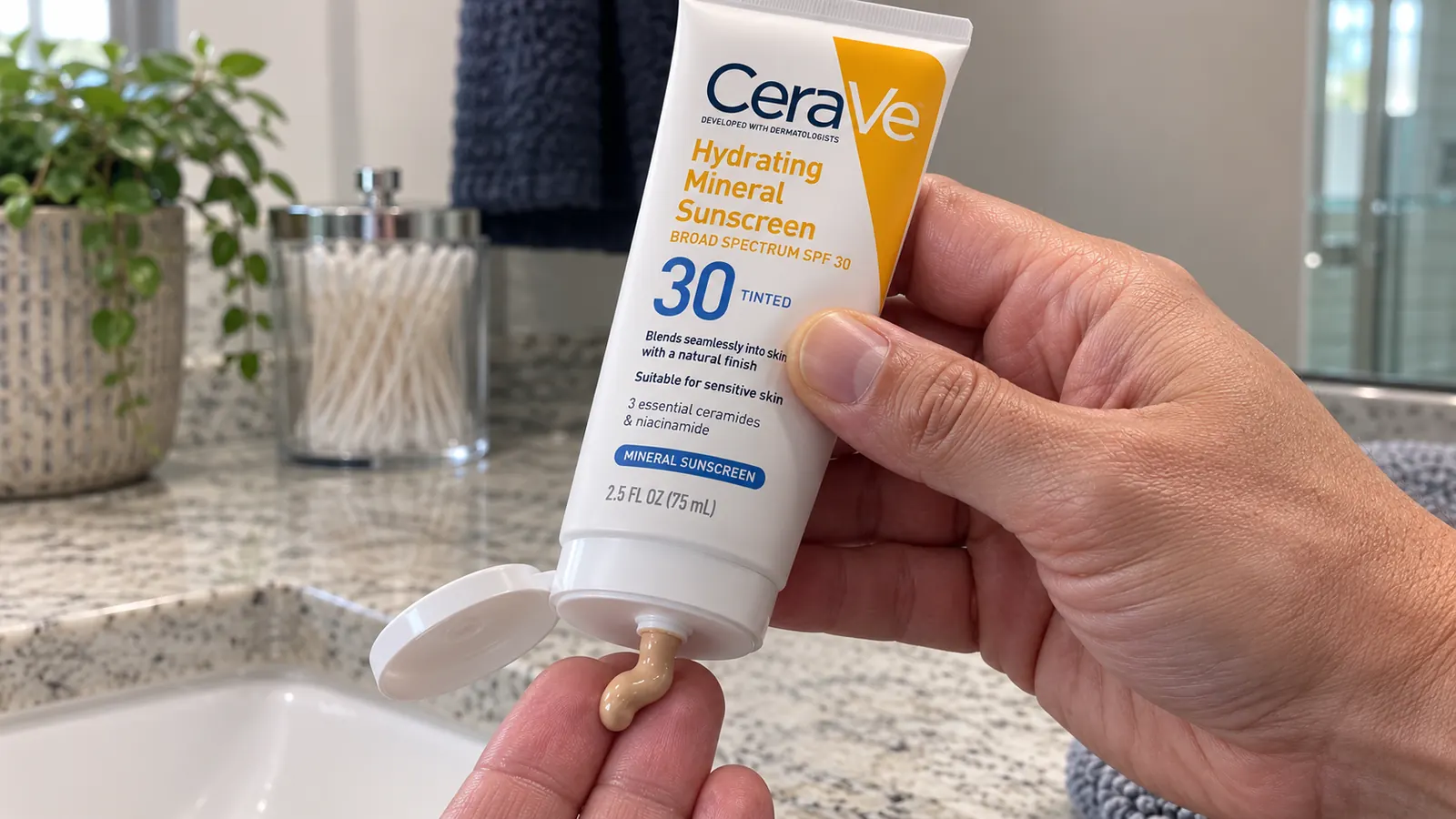
The single biggest lever for that is a mineral sunscreen you actually wear every day, not the one sitting half-used in your bathroom drawer from last summer. I switched my own routine, and every client I coach through this now, to CeraVe Hydrating Mineral Sunscreen SPF 30 with Sheer Tint. It uses zinc oxide and titanium dioxide, which sit on top of the skin and physically deflect UV rays instead of absorbing them like chemical filters do. For skin that is already showing sun spots, that distinction matters. This guide walks through exactly how I use it, step by step, to actually stop new spots from forming, not just slap on SPF and hope.
Stop guessing and start with the mineral sunscreen I actually trust
CeraVe's Hydrating Mineral Sunscreen SPF 30 with Sheer Tint is the one I hand to clients who are tired of new sun spots showing up every summer. Zinc oxide protection, a sheer tint that doesn't ghost on darker or fairer skin, and a price that means you'll actually use enough of it.
Amazon Check Today's Price on Amazon →Step 1: Swap to a mineral formula with zinc oxide, not a chemical one
Before you touch a routine, look at what is actually in your current sunscreen. A lot of drugstore formulas rely on chemical filters like avobenzone or octinoxate, which absorb UV rays and convert them to heat. That works fine for a lot of people, but I have watched it aggravate rosacea-prone and post-menopausal skin that is already dealing with more redness and sensitivity than it used to. Mineral sunscreen with zinc oxide and titanium dioxide sits on top of the skin as a physical shield instead, which tends to be gentler and starts protecting the moment it is applied instead of needing 20 minutes to activate.
This is exactly why I point clients toward CeraVe's mineral formula specifically. It is built with both zinc oxide and titanium dioxide at SPF 30, plus ceramides and niacinamide that help repair the skin barrier at the same time it is blocking rays. And the sheer tint solves the number one complaint people have about mineral sunscreen, that chalky, ghostly white cast on your cheeks and forehead. If a sunscreen makes you look pale in every photo, you will not wear it consistently, and consistency is the whole game here.
There is also a reason I care so much about which mineral sunscreen you pick, not just that you pick one. Some of the cheaper zinc formulas I tried over the years pilled under moisturizer, left a gray cast on deeper skin tones, or felt so heavy that clients quietly stopped wearing them by August. A formula only prevents sun spots if it survives contact with your actual morning, humidity, sweat, foundation, and all. That is the test I put every mineral sunscreen through before I recommend it to anyone sitting in my chair.
Do a patch test on your jawline for two or three days if you are new to mineral formulas, just to confirm your skin likes it. Most people tolerate zinc oxide better than chemical filters, but everyone's skin has its own opinions.
Step 2: Apply enough, every single morning, rain or shine
Here is the mistake I see most often, and it is not the product, it is the amount. Most people apply about a quarter of the sunscreen they need for real SPF protection. For your face, neck, and ears, you want roughly a nickel-sized dollop, applied generously, not rubbed in until it disappears to nothing. If you can barely see it going on, you are not wearing SPF 30, you are wearing something closer to SPF 10.
This has to happen every morning, including cloudy days and days you are mostly indoors. UVA rays, the ones responsible for a lot of sun spot formation and general aging, pass straight through clouds and window glass. I keep the tube on my bathroom counter next to my toothbrush so it becomes as automatic as brushing my teeth. If it lives in a drawer, it does not get used.
Apply it as the last step of your morning skincare, after moisturizer, before makeup if you wear any. Give it a minute or two to set before you layer anything on top so it does not pill or streak.
If you drive to work, run errands, or sit near a window most of the day, do not talk yourself into skipping it because you are "mostly inside." I hear that excuse constantly, and it is exactly the group of clients who end up surprised by a new spot along the side of their face that gets the most window light. Ten seconds with a nickel-sized amount is cheaper than any of the fixes you would try later.
Step 3: Target the specific zones where sun spots actually form
Sun spots do not show up evenly. They cluster on the high points of the face that catch the most direct light, cheekbones, the bridge of the nose, the forehead along the hairline, and the part line if you part your hair the same way every day. They also show up heavily on the backs of the hands, the chest, and the tops of the ears, three spots people almost always forget.
When you apply your mineral sunscreen, go slow across those specific zones and make sure you actually see product sitting there, not just a thin ghost of it. I tell clients to physically pat the sunscreen into the cheekbones and hairline with their fingertips rather than swiping it on in one quick pass. And do not stop at your jawline. Pull the same tube down over your neck, the tops of your ears, and the backs of your hands before you walk out the door. Those areas age visibly faster than the rest of your body precisely because they get skipped.
If you part your hair the same direction every single day, that exposed strip of scalp and hairline is taking sun damage year after year without you ever noticing until a spot shows up right along that line. Either switch up your part occasionally or run a little of the sunscreen right along it. Same goes for the tops of your ears if you wear your hair up. I have lost count of how many clients had their first sun spot show up in a place I had to point out with a mirror, because you cannot easily see the top of your own ear.

Step 4: Reapply if you are outside for more than two hours
One morning application protects you through a normal errand-running day, but if you are gardening, walking, or sitting outside for an extended stretch, SPF breaks down under UV exposure and sweat. Keep a small stick or pressed powder version of a mineral SPF in your bag for touch-ups over makeup, since liquid sunscreen is a mess to reapply midday over a full face.
If you are driving long distances, remember that side windows let UVA through even though windshields are usually treated. I have had more than one client develop noticeably more sun spots and fine lines on her left side, the driver's side, from years of daily commuting. If that is you, a light layer of SPF on that side of your face before you get in the car is worth the ten extra seconds.
Same logic applies to sitting by a pool, at a ballgame, or on a porch for a few hours. Set a phone reminder for two hours in if you know you are going to be out longer than that. It sounds fussy the first few times, then it becomes as automatic as reapplying lip balm, and it is genuinely the difference between a sunscreen that protects your morning and one that protects your whole day.
Step 5: Give it 90 days before you judge results, and track a specific spot
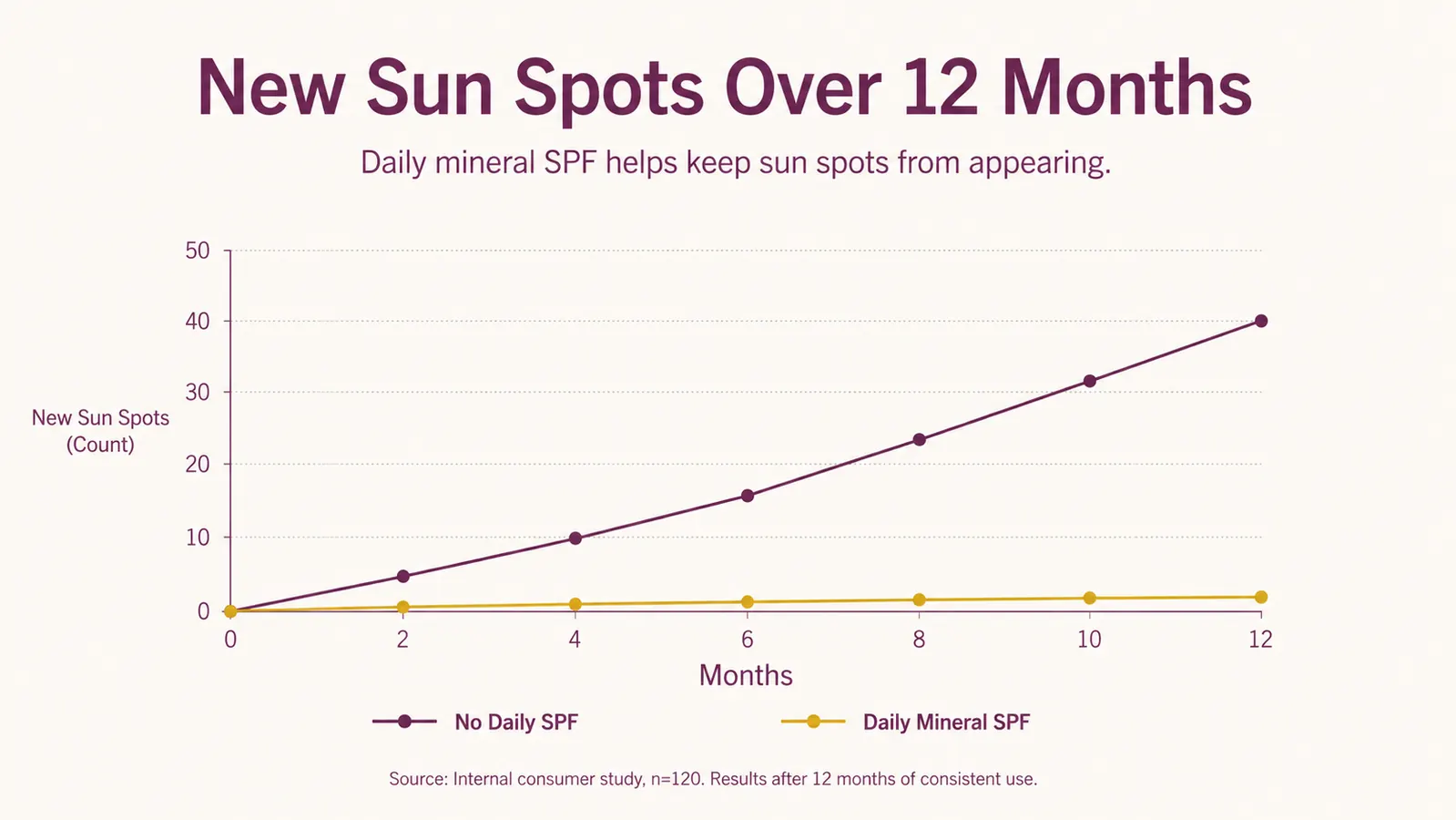
Sun spots do not appear overnight and they do not fade or stop forming overnight either. What consistent mineral sunscreen use actually does is stop new damage from accumulating and slow the ones you already have from getting darker over time. That is a slow, quiet kind of progress, and it is easy to feel like nothing is happening if you are not paying attention.
Pick one or two spots you already have, maybe the one on your left cheekbone or the cluster near your hairline, and take a photo of them in the same lighting once a month. Most of my clients who stick with daily mineral SPF for 90 days tell me the same thing, their existing spots stopped getting noticeably darker over the summer, and they simply stopped getting new small ones popping up in places that used to be clear. That is the win. It is not dramatic, but it is real, and it compounds every year you keep it up.
Do not let one skipped week undo your confidence in the whole plan. Life happens, vacations happen, you forget the tube at a friend's house. What matters is the pattern over a season, not a single missed morning. Get back to it the next day and keep tracking.
What Else Helps
Mineral sunscreen is the foundation, but it works even better paired with a few habits. A wide-brim hat during peak sun hours, roughly 10am to 4pm, takes real physical strain off your face. A vitamin C serum in the morning under your sunscreen adds antioxidant protection that helps neutralize some of the UV damage sunscreen alone does not catch. And if you are already using a retinol at night, that combination of nightly cell turnover and daily mineral protection is the closest thing to a real sun spot prevention system without a dermatologist's office. Just do not use retinol and a fresh application of sunscreen at the same time of day, they belong in different halves of your routine.
Sunglasses with real UV protection matter too, and not just for your eyes. The thin skin around them is some of the first to show sun damage, and squinting all summer without shade adds fine lines on top of whatever the sun itself is doing. And if a spot changes shape, color, or size quickly, that is a conversation for a dermatologist, not a skincare routine. Most sun spots are cosmetic and slow moving. The rare ones that behave differently are worth a professional set of eyes, and a good mineral sunscreen habit does not replace that check, it just gives you fewer new spots to keep an eye on in the first place.
Sun spots are not punishment for a summer you enjoyed years ago. They are just proof you did not have this tube on your counter yet.
Start the habit that actually stops the next spot from forming
The routine only works if the sunscreen is one you will reach for every single morning. CeraVe's tinted mineral formula goes on smooth, skips the white cast, and gives your skin barrier some help while it protects. Grab it and start tomorrow morning, not next Monday.
Amazon Check Today's Price on Amazon →